
By Cesar Cruz
Small spaces need restraint.
In the Los Angeles and Orange County market, I see a lot of jobs with tighter outdoor spaces: smaller patios, narrow side yards, close fence lines, and compact entryways. Those layouts don’t need a heavy lighting plan. They need smart placement, the right fixture scale, and enough restraint to let the space breathe.
Landscape lighting for small spaces comes down to control. You don’t need to fill every corner with fixtures. You need the right fixture size, the right color temperature, and the right surfaces to light. When the layout is tight, every light has to earn its spot.
Here are a few things I look at when helping contractors think through smaller outdoor spaces.
Start With the Right
Fixture Scale
One size doesn’t fit every job.
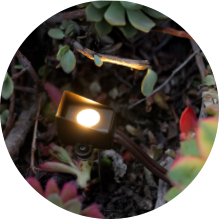
In a smaller yard, patio, or entryway, oversized fixtures can take over fast. The fixture should fit the space the same way the plants, hardscape, and furniture fit the space.
For path lights, look at shorter stems and smaller diameter hats. They keep the fixture lower and tighter to the landscape without drawing too much attention to themselves.
For accent lighting, smaller uplights are usually a better fit when you’re lighting young trees, shrubs, columns, containers, or compact architectural details. The goal is to put light where it helps the space, without making the fixture the main event.
Recessed fixtures can also be a good option when the layout doesn’t leave much room above grade. They keep the lighting clean and reduce visual clutter in tighter areas.
Keep the Color
Temperature Warm
Small spaces can get harsh quickly if the color temperature is too cool or too bright.
I usually recommend staying in the 2700K to 3000K range. That warmer light feels more comfortable in patios, entryways, courtyards, and small backyards. It also works well with wood fences, stucco, stone, brick, planting, and the warmer tones you see on a lot of Southern California homes.
Cooler white light can make a tight space feel flat or overly exposed. Warm light helps the space feel more natural and easier to spend time in.
Use Vertical Surfaces
When ground space is limited, look at what’s already around the yard.
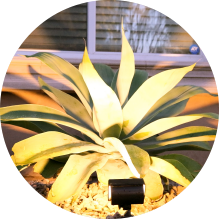
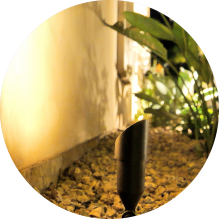
Fences, walls, hedges, columns, and smaller trees can all help carry the lighting design. Uplighting a small tree or shrub can add depth without using a lot of fixtures. Wall washing a fence or exterior wall can make the space feel more open because the boundary doesn’t disappear into darkness.
That’s especially helpful in small yards where the fence line or wall is always in view. A softly lit vertical surface gives the eye somewhere to go, which helps the whole area feel more finished.
Look for Downlighting Opportunities
If there’s something overhead, use it.
Downlighting is a smart move in smaller spaces because it keeps fixtures out of the planting beds and walkways. Trees, patio covers, pergolas, eaves, and overhead structures can all give you a good mounting point.
Done right, downlighting gives the area a natural, moonlit feel. It can light seating areas, walkways, gates, steps, or planting without crowding the landscape with more visible fixtures.
It’s also a good option when there isn’t a clean place to hide wire or when the ground-level layout is already tight.
Keep the Layout Simple
Small spaces are easy to overwork.
A few well-placed fixtures will usually do more than a layout packed with lights. Start with the key areas: the path, the entry, a focal plant, a wall, a seating area, or a step that needs better visibility.
Once those are covered, step back and look at the space as a whole. The best small-space lighting layouts usually feel clean, intentional, and easy to use.
You can always add more later, but a clean layout starts with knowing when to stop.
Final Thought
Small spaces are easy to overwork.
A strong lighting plan doesn’t need a big yard or a high fixture count. Some of the best layouts come from knowing when to pull back.

Cesar has spent over 20 years in the Southern California market. When he’s not talking lighting, he’s usually watching sports, grilling, or enjoying time outside with his family.
 Use this form to sign up for our newsletter. If you need technical support, please contact our